
B2B Lead Generation Strategies for High-Ticket Industries
High-ticket industries—such as enterprise software, manufacturing, financial services, IT solutions, and real estate—depend heavily on quality leads, long-term nurturing, and trust-based decision-making. Unlike low-cost or B2C sectors, the purchase cycle here is slower and more complex and involves multiple stakeholders. This is where strategic and efficient B2B lead generation becomes the deciding factor between scaling sustainably or struggling to find customers.
Before diving into methods, it’s important to first understand what lead generation is and how it shapes business growth. In simple terms, lead generation refers to identifying, attracting, and converting potential customers who show interest in your high-value product or service. For high-ticket industries, lead generation must be precise, data-driven, and consistent to ensure that marketing efforts align with the intent of decision-makers. In this comprehensive guide, we’ll explore the best strategies, platforms, and lead generation tools needed to unlock a consistent pipeline of qualified high-ticket B2B leads.
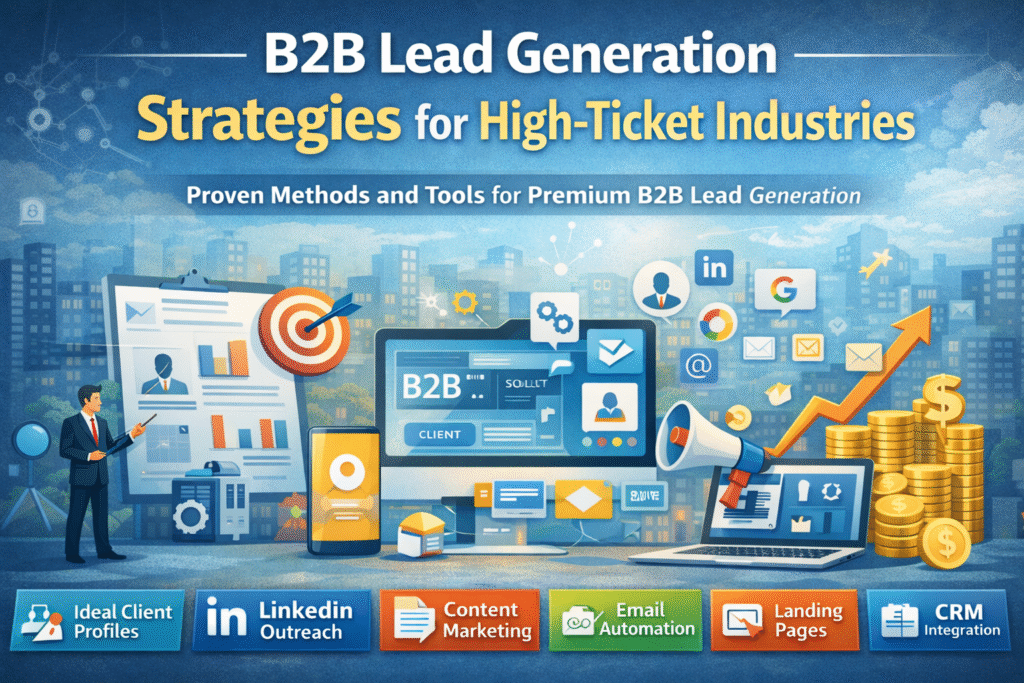
1. Understand Your Ideal Client Profile (ICP)
The foundation of effective b2b lead generation is a clear understanding of your ideal customer. High-ticket buyers do not respond to generic messaging; they expect tailored communication, industry expertise, and clear ROI indicators.
Build your ICP using:
- Decision-maker roles (CEO, CTO, Purchase Manager, etc.)
- Industry, company size, and revenue
- Pain points related to cost, efficiency, compliance, or growth
- Buying triggers and objections
A refined ICP increases efficiency and supports true lead generation, ensuring that your campaigns attract the right audience from the start.
2. Leverage LinkedIn for Targeted Outreach
LinkedIn is the world’s biggest professional network, making it indispensable for lead generation in high-ticket B2B markets.
High-impact strategies include:
- Optimizing your business profile
- Publishing authority-driven content
- Running targeted LinkedIn Ads
- Automating outreach sequences
- Engaging decision-makers in conversations
LinkedIn’s advanced filters make it one of the most effective lead generation tools for industry-specific prospecting and nurturing.
3. Create High-Value Content That Builds Authority
In high-ticket industries, people buy from experts—not advertisers. Content marketing helps you build credibility, demonstrate expertise, and nurture leads through the awareness, consideration, and decision stages.
Content that converts:
- White papers
- Case studies
- Industry-specific blogs
- ROI calculators
- Webinars and workshops
- Long-form LinkedIn posts
This approach is essential because buyers often begin their research by searching what lead generation is, how it applies to their industry, and what solutions actually deliver ROI.
4. Use Email Automation for Long-Term Nurturing
High-ticket sales require time, trust, and communication. Automated email sequences help nurture leads without overwhelming your sales team.
Effective email sequences include:
- Welcome series
- Pain-point-based drip campaigns
- Industry insights
- Personalized offers
- Case studies and testimonials
Automation platforms are among the most important lead generation tools, helping high-ticket businesses stay consistent and relevant.
5. Build High-Converting Landing Pages for Paid Campaigns
Landing pages are central to B2B lead generation because they provide a focused environment that encourages decision-makers to take action—book a call, download a resource, or request a demo.
A high-ticket landing page must include:
- Clear value proposition
- Pain-focused copy
- Industry-specific benefits
- Visual proof (case studies, logos, testimonials)
- Strong CTAs
- Speed and mobile optimization
High-ticket buyers expect clarity and expertise, not generic messaging.
6. Use Account-Based Marketing (ABM)
Account-based marketing is one of the most powerful strategies for high-ticket industries. Instead of reaching broad audiences, ABM targets specific companies, decision-makers, and pain points.
ABM includes:
- Personalized landing pages
- Hyper-targeted ads
- Custom offer sequences
- Direct outreach
- Deep research on each account
ABM not only increases high-ticket conversions but also supports true lead generation through customized communication and high-level relevance.
7. Leverage Paid Ads for High-Intent Lead Capture
Google Search, Meta Ads, and LinkedIn Ads remain the top-performing channels for high-ticket lead acquisition.
Paid ads work because:
- They reach buyers actively searching for solutions
- They allow deep segmentation
- They support retargeting funnels
- They scale effectively with data
High-ticket campaigns must be optimized carefully to avoid wasted spending, making it essential to use expert-level lead generation tools and tracking systems. If you’ve ever searched for online lead generation services near me, you’ll understand how paid ads capture local and high-intent buyers faster than organic methods.
8. Introduce Retargeting to Re-Engage Warm Leads
Most high-ticket prospects won’t convert immediately. They may visit your site multiple times, compare competitors, or wait for budget approvals. Retargeting helps close this gap.
Winning retargeting assets:
- Demo videos
- Testimonials
- Benefits-focused creatives
- Case study ads
Retargeting is essential for any lead generation campaign that aims to maximize profitability.
9. Use CRM Integration to Track the Entire Buyer Journey
High-ticket leads require careful tracking, nurturing, and follow-up. Without a solid CRM, opportunities slip through the cracks.
A CRM helps track:
- Lead source
- Stage in the funnel
- Engagement level
- Follow-up schedules
- Sales team activity
This data empowers you to understand what works and what needs improvement.
10. Offer Value-Based Lead Magnets
High-ticket clients prefer valuable resources that help them make informed decisions.
Best lead magnets for high-ticket industries:
- Audit reports
- Industry analysis PDFs
- Demo consultations
- ROI forecasts
- Free strategy sessions
These powerful magnets transform curiosity into action.
Final Thoughts
High-ticket industries rely on precision, personalization, and deep industry insights. Effective B2B lead generation is not about volume but about quality, strategy, and consistency. From LinkedIn outreach and email automation to ABM and CRM tracking, every piece plays a vital role in successful lead generation.
If you’re evaluating whether to hire an agency or search for best b2b lead generation services near me, remember that high-ticket success requires expertise, advanced processes, and the right lead generation tools—not generic marketing. Whether you’re building internal capability or partnering with experts, investing in true lead generation is the key to scaling your business with predictable, premium-quality leads.